Bedding & textile guide
How to Choose a Comforter for Warm, Humid Nights
A coastal bedroom can be beautiful in the afternoon and distinctly less charming at two in the morning, when the air is still and the bed seems to have acquired its own weather. The right comforter does not have to solve the climate. It should, however, provide enough cover to feel restful without trapping more warmth and moisture than the night already supplies.
Choosing a comforter for a humid climate is an exercise in balance. A bed needs some insulation, even in summer: air-conditioning can make a room cool, a ceiling fan can leave shoulders exposed, and temperatures near the coast may fall after sunset. But a bulky, heat-retaining layer can make a sleeper feel enclosed just when the body is trying to shed warmth. The goal is not necessarily the thinnest comforter on the shelf. It is a comfortable, breathable layer whose fabric, fill, and construction suit both the room and the person sleeping in it.
That distinction matters because “cooling” is not a single material property, and labels rarely tell the whole story. Fiber content is one clue; weave, fabric weight, fill, stitching, and laundering instructions are others. A comforter that feels airy in a showroom may behave differently in a tightly closed bedroom with high humidity. The most useful choice begins with an honest account of the conditions: how warm the room gets, whether air-conditioning runs overnight, how much warmth the sleeper prefers, and what other layers are already on the bed.
Start with the room, not the label
“Warm, humid” can describe several very different nights. A room with a reliable air conditioner may become cool and dry by midnight. A naturally ventilated room may remain warm, with open windows admitting a breeze that comes and goes. A vacation home may shift between those conditions as weather changes or guests adjust the thermostat. In each case, the best comforter may be different.
Notice what happens under the current bedding. If you wake hot but feel comfortable when you fold back the cover, the insulation may be excessive. If you wake chilly after the air conditioner cycles on, a very light layer may be insufficient. If the bed feels clammy, the cause could be a combination of warmth, humidity, fabric, and limited airflow—not simply the comforter’s outer material. Keeping a short note for several nights can help identify a pattern more reliably than a single restless evening.
Also consider the other textiles in the bed. A comforter rests on a system: mattress protector, fitted sheet, top sheet, blanket, and sometimes a cover. A dense protector or several heavy layers can change the overall feel, even when the comforter itself is lightweight. When heat is the concern, adjusting one layer at a time makes the results easier to read. You might begin with breathable sheets and a thinner blanket before replacing a comforter that is otherwise in good condition.
What “lightweight” really means
Lightweight is a useful starting point, but it is not a complete specification. It may refer to the weight of the finished comforter, the amount of fill, the thickness of the loft, or simply the way a manufacturer describes its intended use. Two comforters with similar names can feel quite different on the bed. When details are available, look for dimensions and total weight, fill composition, and care instructions rather than relying on a seasonal adjective alone.
Loft—the height and puffiness of the filling—affects how much air a comforter holds. Trapped air helps provide insulation, which is useful in cool conditions but can feel excessive in a hot room. A lower-loft comforter may offer a sense of coverage with less bulk. Yet a low profile is not a guarantee of cool sleep: the fill and cover still influence how heat and moisture move through the bedding.
Consider how the comforter will be used. Someone who likes the familiar weight of a cover may prefer a light comforter over a bare sheet, while a person who sleeps hot may want a cover that can be removed easily or folded down without disturbing the bed. In a guest room, flexibility matters too. A lighter comforter paired with a separate blanket allows visitors to adapt the bed to their own preferences.
Compare the fill with care
The fill is the comforter’s insulating center. Natural and synthetic fills can each be made in different weights and constructions, so the fiber name alone does not settle the question. A light fill with a breathable outer fabric may work well in warm conditions; a thicker version of that same fill may not. Seek clear descriptions of both the fill and the intended warmth level, and treat broad claims such as “all-season” as an invitation to examine the details rather than a promise that one layer will feel the same in every home.
Down and down-alternative fills are often associated with loft, softness, and warmth. Their actual feel depends on the amount of filling, the design of the chambers, and the shell fabric. Some sleepers enjoy the buoyant, enveloping quality; others find a lofty comforter too warm or too substantial for a humid room. If you are choosing between them, pay attention to the stated weight and warmth category, and check whether the comforter can be aired or cleaned according to its care label.
Cotton and linen can be used in comforter fillings or covers, but the two roles should not be confused. A breathable fiber in a fill does not automatically make the whole comforter cool if its cover is tightly woven or its loft is substantial. Nor does a natural fiber guarantee that a sleeper will feel dry in every circumstance. Humidity, room temperature, personal comfort, and the rest of the bedding all contribute.
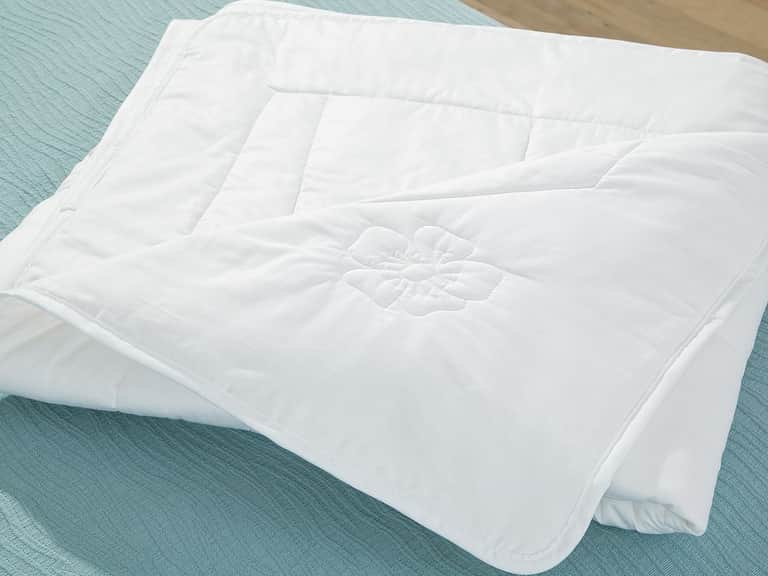
One example of a deliberately lighter approach is the DownTown Company Summer Linen Summer Comforter. Its listed fill is a cotton-linen blend, and its cover is cotton sateen; the manufacturer describes it as lightweight and intended for warmer climates, with gentle insulation for broader use. Those details offer a more helpful basis for consideration than the word “summer” by itself. The care guidance is dry cleaning, a practical point to weigh alongside comfort and construction.
The cover has a job of its own
The shell—the fabric enclosing the fill—meets the sleeper directly and can affect the comforter’s hand, drape, and airflow. Cotton is common in bedding covers and comes in a range of weaves. Percale tends to have a crisp, matte character; sateen generally feels smoother and more closely finished. Neither weave is a universal answer to heat. The difference a person notices depends on the fabric’s weight and finish, the room, and individual preference.
Linen has a textured, relaxed hand and is often valued for breathability and moisture management. It may be an appealing choice for a coastal bedroom, where an informal surface suits the setting as much as its practical qualities do. But linen is not automatically lighter than cotton, and its natural texture will not erase the effects of a warm room. Read the construction and care information, and decide whether you enjoy the fabric’s feel against the skin.
Silky or tightly finished covers can feel smooth, but smoothness and breathability are not synonyms. Likewise, a soft finish may be pleasant without being a reliable sign of how warm the comforter will feel overnight. When possible, handle a fabric sample or examine the comforter in person. If that is not possible, detailed product specifications and a clear return policy can help reduce uncertainty.
Construction: the quiet architecture of a comforter
Construction determines how fill is distributed and whether it stays in place. In a box-style design, sewn compartments help limit movement of the fill; in a quilted design, stitching passes through the layers in a repeated pattern. These approaches can influence loft, drape, and how evenly the comforter covers the bed. The choice is less a matter of one construction being inherently superior than of finding a design that provides the desired warmth and holds up to ordinary use.
Stitching also changes how the comforter falls around the body. A generously filled piece with stable compartments may have a fuller profile, while a thinner quilted design can lie closer to the bed. If a comforter gathers into heavy folds or shifts toward one side, it may feel less comfortable regardless of its nominal weight. Look for construction notes that explain how the fill is secured, and consider the size of the comforter relative to the mattress and the people sharing it.
On a humid night, good construction is not a substitute for ventilation. It does, however, help the bedding perform predictably. A comforter that maintains an even distribution of fill is easier to arrange and less likely to develop cold or overly warm patches. That consistency can matter in shared beds, where one person may want more coverage than the other.
Build a flexible bedding system
For a coastal bedroom, flexibility often proves more useful than a single supposedly perfect comforter. A light comforter can be the principal covering on warm nights, with a thin blanket kept nearby for a cool spell. On muggy evenings, the comforter can be folded at the foot of the bed or used only across the legs. When the weather changes, the same layer can be combined with a sheet or blanket rather than replaced outright.
Sheets play an important part in this arrangement. A breathable sheet can feel less clingy than a fabric chosen mainly for a heavy, plush finish, though personal preference remains central. Linen sheets, for example, have a distinctively textured surface and may soften with use; cotton sheets vary widely according to weave and weight. The useful question is not which material wins in the abstract, but which combination feels comfortable in your room and is manageable to wash.
It can be tempting to solve every warm-night problem by removing layers. That may work until the air conditioner turns on or a breeze cools the room. A modest comforter offers a middle course: enough coverage to make the bed feel finished, with a separate lighter layer or sheet available when the temperature changes. For a guest room, this arrangement is especially considerate because comfort is personal and visitors rarely arrive with a precise forecast of their own sleeping habits.
Care matters in a humid home
In a warm, humid setting, bedding may need more frequent laundering or airing, particularly if the room has limited ventilation. Follow the care label rather than assuming that a natural fiber can be washed casually. Some comforters are machine washable; others require professional cleaning. A dry-clean-only instruction may be entirely reasonable, but it changes the effort and cost involved in everyday care.
When washing is permitted, avoid overloading the machine. A comforter needs room to move so water and detergent can circulate; a crowded drum may leave it inadequately rinsed or unevenly cleaned. Use the recommended detergent and temperature, and dry it thoroughly according to the label. Damp fill stored in a closet can develop an unpleasant odor, so allow the comforter to become completely dry before putting it away.
Between washes, airing the comforter in a well-ventilated, shaded place may help it feel fresh. Strong direct sun can affect some fabrics and colors, so check the manufacturer’s advice. A removable cover can make routine cleaning easier by taking on much of the day-to-day contact, though the cover itself should also be laundered in accordance with its instructions. Small habits—making sure bedding is dry, avoiding a cramped storage space, and tending to spills promptly—often do more than an elaborate maintenance ritual.
A practical checklist before choosing
- Assess the room. Note whether it is air-conditioned, naturally ventilated, or warm throughout the night.
- Identify the problem. Decide whether you need less insulation, a lighter feel, easier temperature adjustment, or a more manageable care routine.
- Read beyond the headline. Check fill, shell fabric, weight or warmth guidance, construction, dimensions, and cleaning instructions.
- Consider the whole bed. Sheets, protectors, blankets, and mattress materials can all change the overall sensation of warmth.
- Plan for variation. A separate blanket or top sheet can make a lightweight comforter useful across more than one season.
- Choose for real life. A comforter that suits your washing facilities and storage space is more likely to remain comfortable and well cared for.
Questions people often ask
Is linen always cooler than cotton?
No. Both fibers can be used in fabrics with different weights, weaves, and finishes. Linen’s textured, breathable character appeals to many warm sleepers, while cotton offers a broad range of familiar surfaces, from crisp percale to smooth sateen. The comforter’s fill and overall construction matter as much as the name of the fiber.
Should I choose the thinnest comforter available?
Not necessarily. The thinnest layer may leave you cold when the room cools, or fail to provide the sense of coverage you prefer. A lightweight comforter that can be folded back or paired with a separate blanket is often more adaptable than a single very thin layer.
Can one comforter work all year?
Sometimes, especially in a stable indoor climate, but “all-season” is not a standardized guarantee of comfort. A person who sleeps warm may find a lightweight comforter suitable for much of the year; someone who prefers substantial warmth may want a second layer for colder months. The room and the sleeper determine what “all year” means.
How can I tell whether humidity or insulation is the issue?
It is difficult to separate them completely, because both contribute to how the bed feels. If you are comfortable after folding back the comforter, its warmth may be a significant factor. If the room itself feels close and still, ventilation may also be part of the problem. Try changing one element at a time and observe the difference over several nights.
Comfort is a matter of proportion
A warm-climate comforter is not required to perform a miracle. It cannot cool a room whose windows have been shut against a heavy night, or make every sleeper agree about the thermostat. What it can do is avoid adding unnecessary bulk, provide a breathable surface, and offer enough insulation for the conditions that actually occur—not merely the conditions suggested by the season.
Begin with the room, compare the fill and shell, and give care instructions their proper place in the decision. Then treat the comforter as one part of a flexible bed rather than the final word on sleep. In a coastal house, where the air can shift from salt-cool to close and still within the space of an evening, the most satisfying bedding is often the bedding that knows when to step back.