Textiles & Care
Understanding Organic Standards in Coyuchi Bedding
An organic label can tell you something about the flax in a pillowcase, something about the processes that turned it into fabric, and rather less than you might hope about the life of the finished textile. The art is in knowing which is which.
In a bedding shop, the word organic often appears to do the work of a small committee. It suggests cleaner fields, gentler chemistry, better sleep, perhaps even a more considerate relationship with the planet. But textiles are made through a chain of stages, and a label may speak to one link, several links, or—in the case of a credible third-party certification—a defined set of requirements across much of the chain. The word on its own is not a complete account.
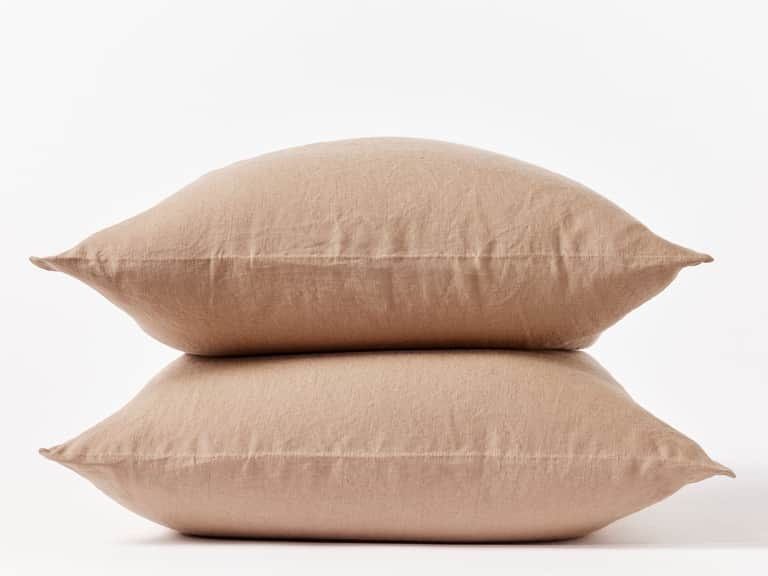
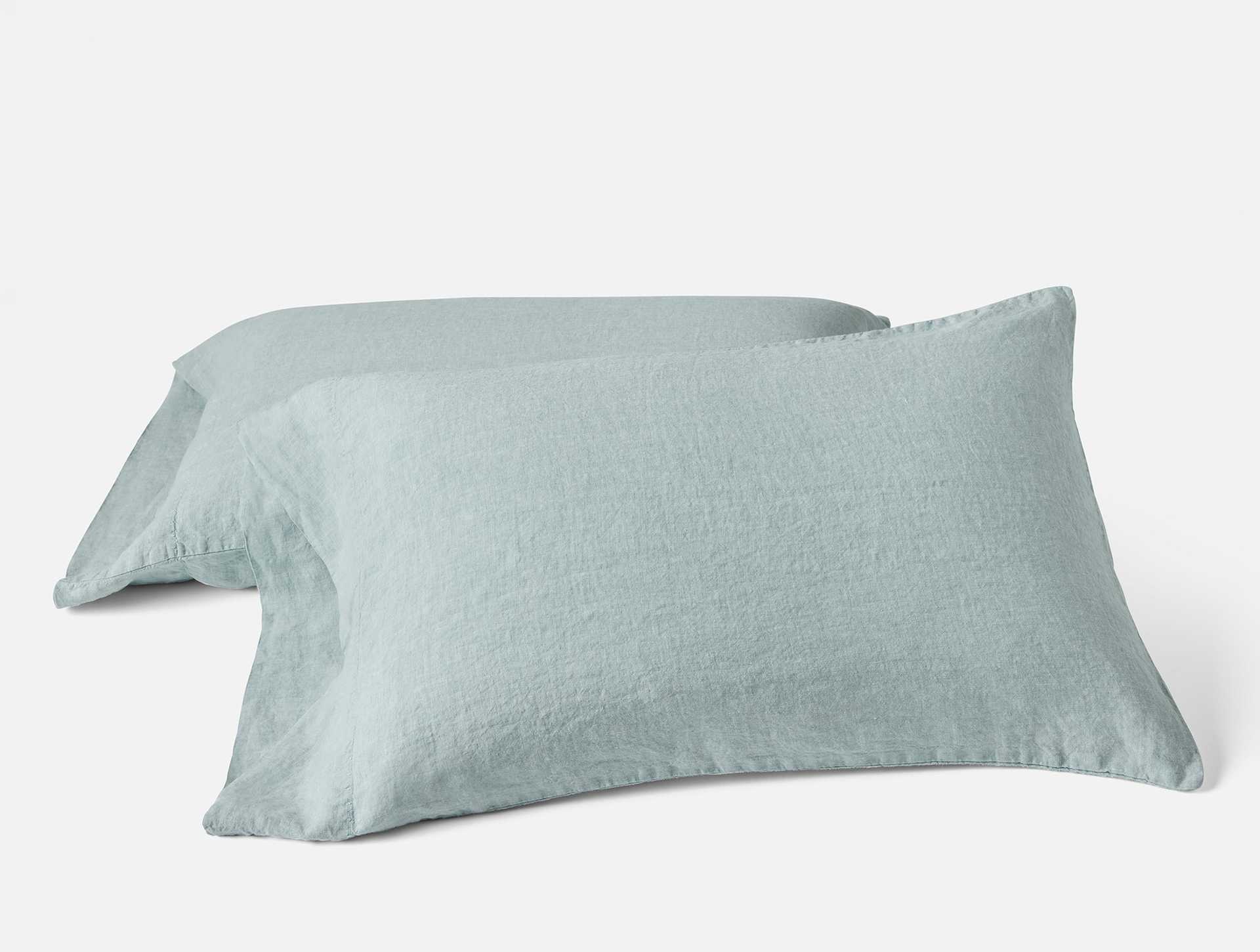
This distinction matters when considering Coyuchi bedding, including its Organic Relaxed Linen Pillowcases. Product information identifies these pillowcases as made from 100% organic flax grown in France, woven into linen in Portugal, and GOTS certified. It also describes pick-stitched cuffs, a plant-based softener finish, and care instructions calling for a cold, gentle machine wash and low tumble drying. Each statement answers a different question. Together, they make a useful case study in how to read a textile claim without asking any one label to say more than it can.
First, separate the fiber from the finished textile
A sheet or pillowcase begins long before it reaches a bed. Fiber is grown or produced; it is harvested, cleaned, spun into yarn, woven or knitted into fabric, dyed or finished, sewn, and distributed. The journey may cross borders and involve separate farms, mills, and factories. “Organic” can refer to the agricultural origin of a natural fiber, while a certification such as the Global Organic Textile Standard (GOTS) addresses defined conditions for processing and handling as well as fiber content.
That difference is easy to miss because packaging compresses a complicated supply chain into a few short phrases. “Organic flax” describes the raw material. “GOTS certified” is a claim about conformity with a standard, subject to the standard’s requirements and certification system. “Woven in Portugal” identifies a manufacturing stage and location. None of these phrases, standing alone, tells the entire story; none should be treated as a synonym for the others.
For the Coyuchi pillowcases, the published description says the flax is grown in France and the linen is woven in Portugal. It also names GOTS certification. These details are more informative when kept distinct: origin describes where the agricultural fiber comes from, weaving describes where a particular transformation takes place, and certification describes whether covered operations and products meet specified criteria. One should not infer that every stage occurred in the same country, or that the place of weaving is necessarily the place of sewing or final finishing, unless the label or documentation says so.
What GOTS is designed to cover
GOTS is a voluntary textile standard with requirements related to organic fiber and processing. It is not simply a farm label attached to a finished object. The standard sets criteria for the composition of certified products and for aspects of textile processing, including restrictions on certain substances and requirements concerning environmental management and social responsibility within the scope of the certification. Certification is carried out through approved bodies, which assess operations and supply-chain documentation against the applicable standard.
There are different GOTS product-label categories tied to the share of certified organic fiber in the textile. Under the standard’s familiar labeling framework, a product labeled “organic” generally requires at least 95% certified organic fibers, while a product labeled “made with organic” requires at least 70%. Requirements and wording can change as standards are updated, so anyone making a close comparison should consult current GOTS guidance rather than relying on a remembered threshold or a retailer’s shorthand.
A claim that a particular linen item is GOTS certified is therefore more specific than a broad statement that a brand values sustainability. It indicates a relationship to a defined certification system. Still, a consumer-facing product description is not a complete audit report. It may not disclose the certification number, the scope of every supplier’s certification, or the precise documentation behind each stage. When such details matter—perhaps for institutional purchasing, compliance, or a careful comparison—ask the seller for the current certificate or other traceability information, and check that it applies to the product or operation in question.
It is also worth resisting the tempting leap from certification to perfection. A standard can set meaningful rules and provide accountability without making a product impact-free. Growing crops uses land and water; manufacturing and transport consume resources; a durable textile still eventually wears out. Certification is a structured signal about specified practices, not a declaration that the object has no environmental footprint.
A label is not a care instruction
Organic certification tells you something about sourcing and processing; it does not decide how you should wash a pillowcase. Care depends on the fiber, weave, dyes, finishing, construction, and the manufacturer’s testing. Linen, made from flax, has a character different from cotton or lyocell. Its texture can soften through use and laundering, but that does not mean every linen item should be washed or dried in exactly the same way.
The Organic Relaxed Linen Pillowcases are described as 100% organic flax linen, woven in Portugal, with a plant-based softener finish. Their care guidance calls for machine washing in cold water on a gentle cycle, usually with like colors, followed by low tumble drying. Some product descriptions also suggest removing the cases promptly and allow a warm iron if desired. The best routine is the one on the care label attached to the specific item: product descriptions can differ, and finishes or colorways may have their own instructions.
A gentle cycle limits the mechanical stress of washing; cold water can help reduce energy use and may be kinder to color; low heat is less demanding on fibers than a hot dryer. These are practical considerations, not magical guarantees. Avoid overloading the machine, use an appropriate amount of mild detergent, and keep the care label in view. Bleach and optical whiteners may be unsuitable for some fabrics and finishes. When in doubt, follow the manufacturer’s directions rather than improvising from a general rule about “natural” materials.
Air-drying can be a useful option where conditions allow, though drying method should still be guided by the item’s instructions and the realities of a household. A beach house, for instance, may offer a line and a persistent breeze—or salt air, damp weather, and a narrow window before the next guest arrives. The useful principle is not an idealized ritual but a repeatable routine that gets the fabric clean without unnecessary abrasion, heat, or chemical treatment.
Read composition and construction alongside certification
Certification is only one part of choosing bedding. The material tells you what the textile is made from; construction tells you how it is assembled; care guidance tells you how the maker expects it to be maintained. These facts have direct consequences for comfort and longevity that a logo cannot settle.
Linen’s loose, breathable character is often appreciated in warm rooms and by sleepers who prefer a textured surface. A relaxed weave may feel different from a smooth, tightly finished cotton fabric. The Coyuchi pillowcase description notes natural breathability and temperature regulation, and says the linen softens with use. These are useful material and performance descriptions, but individual comfort varies with room temperature, bedding layers, personal preference, and the condition of the textile. “Cooling” is not a fixed temperature measurement; it is a description of how a fabric may feel and manage moisture in context.
Construction details matter, too. Pick stitching at the cuffs is a small finishing feature: it can add definition and visual restraint, but it is not itself an organic certification. A plant-based softener is a description of the finish, not proof that every chemical used throughout the supply chain is plant-derived. If a finish is important to you, look for the exact claim and its scope rather than allowing a pleasant-sounding phrase to stand in for technical documentation.
Labels are most useful when read cumulatively. Ask: What is the fiber? What percentage of the textile is made from it? Where was it grown or produced? Where was it processed? Which certification is named, and does it apply to the product? How is the item constructed? What does the care label require? A listing that answers these questions gives a more grounded picture than one relying on a single emblem or adjective.
Organic claims and the limits of shorthand
Marketing language often moves faster than certification language. “Natural,” “responsibly made,” “eco-friendly,” and “sustainable” may convey a brand’s intention, but they do not all have a single, universally accepted meaning for a finished textile. They should not be treated as interchangeable with a named certification. A claim is more useful when it is specific, verifiable, and clear about what it covers.
“Organic,” in particular, can blur the distinction between agricultural production and textile manufacture. A fiber can be certified organic at the farm level, while later processing is not necessarily covered by the same certification. Conversely, a textile standard may include requirements for multiple processing stages, but its certificate has a defined scope and does not automatically establish every claim a reader might associate with the word. The relevant question is not simply whether a product is organic, but what part of its journey the claim describes.
Nor should organic be confused with hypoallergenic. Organic status concerns specified production and processing criteria; a person’s response to bedding can depend on many factors, including the fiber itself, detergent residues, dust mites, dyes, or individual sensitivities. A certified product may be a preference for someone seeking particular sourcing standards, but certification alone is not a medical promise.
Likewise, “organic” does not mean that a textile requires no care or that it will last indefinitely. Durability is shaped by fiber quality, yarn and weave, construction, use, laundering, and repair. A well-maintained pillowcase that remains in service for years can be a more sensible household choice than one frequently replaced, whatever its label. The label helps describe how a product was made; the life it receives at home remains part of the story.
A practical checklist for reading bedding labels
When comparing organic bedding, it can help to approach the label as a modest piece of evidence rather than a final verdict. The following questions keep the reading precise:
- What is the fiber? Look for specific composition, such as 100% flax linen, rather than relying on a collection name.
- What does “organic” modify? Is the claim about the raw fiber, a component, or the finished textile?
- Is a named standard identified? A certification is more assessable than a general sustainability phrase, but its current scope still matters.
- Does the certification apply to this item? A brand’s general commitments are not automatically equivalent to certification of every product.
- Are the places of origin and manufacture stated clearly? Distinguish where the fiber was grown from where it was spun, woven, dyed, sewn, or finished.
- What is the construction? Weave, weight, closures, seams, and finishing can affect feel and maintenance.
- What are the care instructions? Follow the label for the specific product; certification does not replace laundering guidance.
- Can the seller provide more detail? For consequential purchasing decisions, ask about certificates, scope, and supply-chain documentation.
This method is deliberately unglamorous. It declines the fantasy that one seal can answer every question, but it also avoids the cynicism that says labels are meaningless. A certification can make a real difference by setting common criteria and requiring oversight. Its value lies precisely in its boundaries: it is useful when those boundaries are understood.
The beach-house test
In a coastal home, bedding has to live with more than the idea of the sea. There may be humid nights, sandy feet, open windows, frequent visitors, and a laundry schedule that is less poetic than the view. A linen pillowcase may suit this setting because of its breathable feel and relaxed appearance, but its practical value will depend on whether the household can care for it as directed and whether its texture is welcome day after day.
That is where the product details become tangible. The Organic Relaxed Linen Pillowcases are presented as a pair, made from French-grown organic flax woven in Portugal, GOTS certified, and finished with a plant-based softener. Their relaxed linen is intended to soften with use, while the pick-stitched cuffs add a quiet edge. Those facts help a reader imagine the item’s material and construction. They do not promise that linen will suit every sleeper, that every stage of its life is without impact, or that a preferred wash routine can be ignored.
For a careful buyer, that is enough to begin. Consider the certification as one piece of information in a larger account: fiber, processing, construction, care, and expected use. The choice becomes less about purchasing a reassuring word and more about understanding the object that word is attached to.
A more exact kind of reassurance
Organic bedding can carry genuine value, especially when a claim is specific and supported by a credible standard. But reassurance is strongest when it is not asked to do too much. GOTS certification can help consumers assess defined aspects of fiber content and textile processing; it does not explain every environmental consequence, determine personal comfort, or prescribe laundering. A product description can clarify origin and construction; it is not necessarily a full supply-chain dossier.
In Coyuchi’s case, the available information about the Organic Relaxed Linen Pillowcases offers several distinct points: organic flax grown in France, linen woven in Portugal, GOTS certification, a plant-based softener finish, and gentle-care instructions. Read together, these particulars make a more meaningful account than the word “organic” alone. They also leave sensible questions open—about exact certification scope, additional manufacturing stages, and the individual experience of using and caring for linen.
That mixture of knowledge and restraint is not a weakness. It is how labels become useful. The informed reader does not expect a pillowcase to deliver an entire environmental philosophy. They ask what it is made of, what the standard verifies, how it should be maintained, and how long it can remain in use. In a room where the curtains move with the sea breeze, the answers may be quieter than the marketing, but they are far more durable.